In the year 876, King Charles the Bald processed through the streets of Chartres bearing a gift that would transform this modest hilltop town into one of Christendom's greatest pilgrimage centers: the Sancta Camisa, a fragment of silk believed to have been worn by the Virgin Mary herself. His grandfather Charlemagne had received this precious relic from the Byzantine Empress Irene, and now Charles presented it to the cathedral built on a site already sacred to the faithful. Within decades, pilgrims began arriving from across Europe, drawn by the promise of the Mother of God's presence dwelling in cloth and stone.
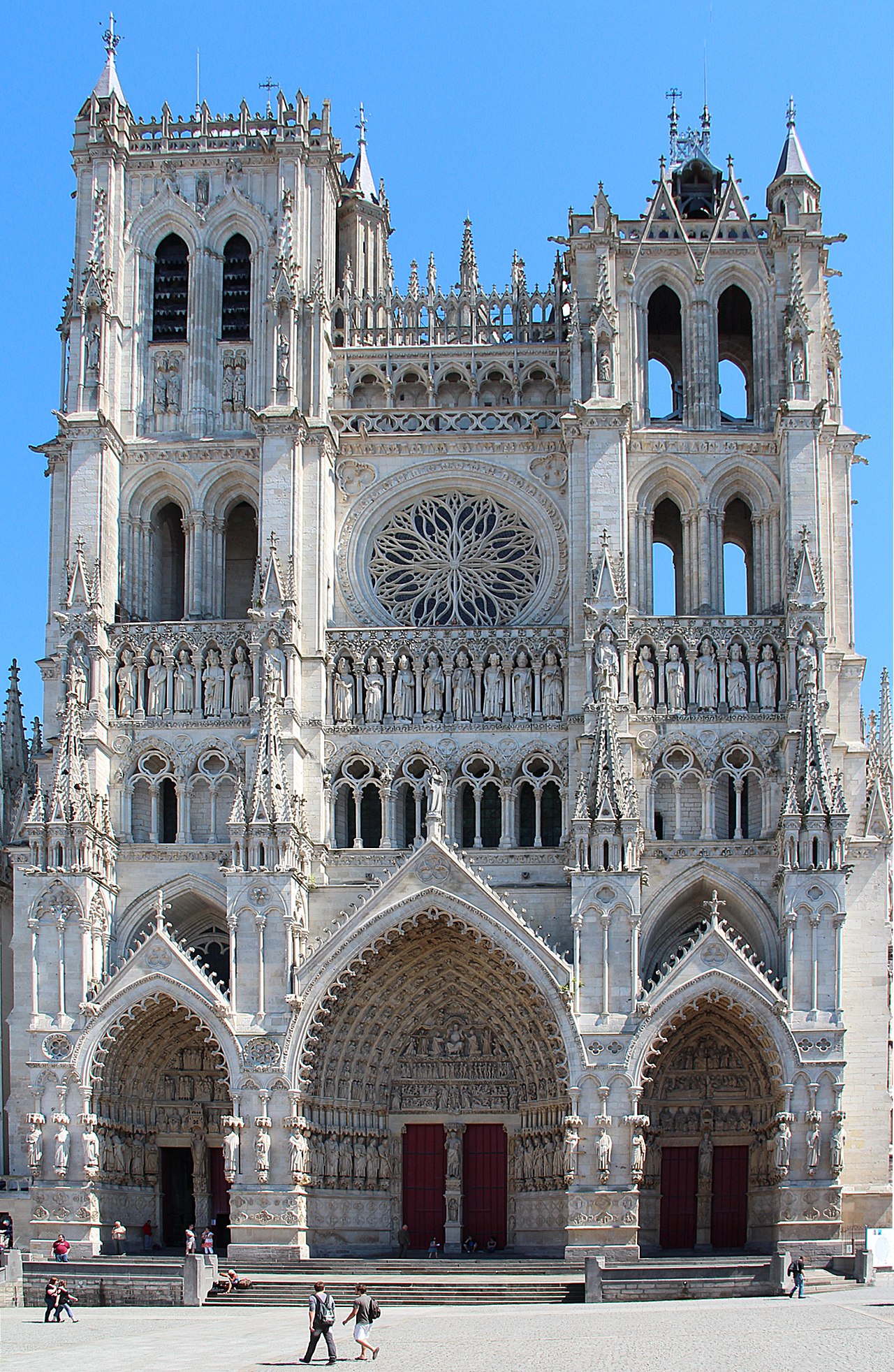
Today, nearly twelve centuries later, the Cathedrale Notre-Dame de Chartres rises from the wheat fields of the Beauce plain like a vision of the heavenly Jerusalem. Its twin spires—one Romanesque, one Gothic—mark the landscape for miles, guiding modern pilgrims just as they guided medieval travelers. Inside, 176 stained glass windows filter the light into the famous "Chartres blue," illuminating the largest surviving medieval labyrinth in France and casting their glow upon the Veil of Mary, displayed in a new reliquary since 2015. When 19,000 pilgrims walk the sixty miles from Paris to Chartres each Pentecost, they join a procession that has continued almost unbroken since the twelfth century.
📜 History & Spiritual Significance
The origins of Christian worship at Chartres reach back to the earliest centuries of the faith. Local tradition holds that a sanctuary dedicated to a virgin who would bear a child—the Virgini Pariturae—existed here even before Christ's birth, though scholars treat this legend with appropriate caution. What is certain is that by the fourth century, a Christian church stood on this hill, and by the ninth century, the Sancta Camisa had arrived, transforming Chartres into a major Marian shrine.
The relic's power seemed confirmed in 911 when the Normans besieged the city. Bishop Gancelme displayed the Veil from the city walls, and according to chroniclers, the attackers fled in terror. This miracle cemented the cathedral's reputation, and pilgrimage numbers swelled. The church was rebuilt several times—destroyed by fire in 1020, rebuilt by Bishop Fulbert, and catastrophically damaged again in 1194 when lightning struck the cathedral.
The fire of 1194 seemed to spell the end of Chartres' pilgrimage tradition. For three days, the townspeople believed the Sancta Camisa had been lost. Then priests emerged from the crypt, where they had sheltered behind iron doors, carrying the relic unharmed. The miraculous survival was interpreted as the Virgin's desire for a grander church. Within twenty-six years, the cathedral we see today—one of the supreme achievements of Gothic architecture—rose from the ashes. Craftsmen from across France contributed their skills; guilds donated the magnificent windows that depict their trades; and pilgrims arrived in such numbers that the cathedral became one of the wealthiest in France.
The labyrinth, built around 1200, offered pilgrims who could not journey to Jerusalem a symbolic alternative. Walking its 261.5-meter path on their knees, they completed a "Road to Jerusalem" without leaving French soil. The labyrinth remains today, uncovered on Fridays from Lent through October for pilgrims to walk.
The French Revolution brought devastation. The cathedral treasury was melted down, and the original statue of Notre-Dame de Sous-Terre—venerated in the crypt since at least the ninth century—was destroyed. Yet the building itself survived, and a new Black Madonna was carved to replace what was lost.
In 1979, UNESCO inscribed Chartres Cathedral as a World Heritage Site, recognizing it as "the most authentic and complete expression of the High Gothic style." Pope St. John Paul II visited in 1997, venerating the Veil and praying before the labyrinth. The annual Pentecost pilgrimage from Paris, revived in 1983, has grown from a few hundred participants to over 19,000 in recent years, making it the largest traditional pilgrimage in France.
☩ Pilgrimage Sites in Chartres
Cathédrale Notre-Dame de Chartres
Cathedral of Our Lady of Chartres
The Gothic cathedral we see today was built primarily between 1194 and 1220, an astonishingly short period that accounts for its remarkable architectural unity. The flying buttresses—among the first ever constructed—allowed builders to raise the nave vault to 37 meters and fill the walls with glass rather than stone. Of the 176 original stained glass windows, 152 survive from the thirteenth century, the largest collection of medieval glass in the world. The west facade incorporates the Royal Portal from the earlier church, with its elongated column statues of Old Testament figures dating to around 1150.
The interior invites contemplation at every turn. The floor labyrinth, 12.9 meters in diameter, lies in the nave and can be walked on Fridays when the chairs are cleared. The south ambulatory houses the Notre-Dame de la Belle Verriere ("Our Lady of the Beautiful Window"), a twelfth-century masterpiece of Marian iconography in the celebrated Chartres blue that survived the 1194 fire. The north tower offers views across the Beauce plain from its 113-meter height; the south tower, built in Romanesque style a century earlier, rises to 105 meters with its distinctive simplicity.
Notre-Dame de Sous-Terre
Our Lady Under the Earth
The Chapel of Our Lady Under the Earth, located in the vast crypt—the longest in France at 220 meters—is the spiritual heart of Chartres pilgrimage. Here, in the dim glow of candles, pilgrims venerate a dark-skinned Madonna enthroned with the Christ Child on her lap. The current statue, carved after the Revolution to replace the destroyed original, depicts Mary with closed eyes while Jesus, eyes open, blesses the world. A holy well nearby, 30 meters deep, has been the object of veneration for centuries, possibly predating Christianity itself.
The crypt preserves elements of earlier churches, including ninth-century walls and the corridor where priests sheltered during the 1194 fire. Guided tours depart from the cathedral gift shop and reveal Romanesque frescoes, early Christian inscriptions, and the foundations that connect this Gothic masterpiece to its ancient roots.
Notre-Dame du Pilier
Our Lady of the Pillar
This sixteenth-century polychrome statue, originally carved as a copy of a thirteenth-century silver Madonna from the main altar, now stands in the north ambulatory on a column from the former rood screen—hence her name, "Our Lady of the Pillar." The statue was crowned in 1855 in the name of Pope Pius IX. Her darkened face, where the original paint has worn away to reveal the wood beneath, has led some to call her the "Black Madonna" of Chartres, though scholars debate whether she was ever intentionally depicted as such. Regardless of color, she remains a focus of intense devotion, surrounded by candles and ex-votos from grateful pilgrims.
The Sancta Camisa (Veil of the Virgin)
The cathedral's most precious relic is displayed in the Treasury, housed since 2015 in a specially designed protective case by Goppion. The Sancta Camisa—a length of silk approximately 5.5 meters long—is traditionally believed to be the garment Mary wore at the Annunciation or during the birth of Christ. Medieval pilgrims reported miraculous cures from touching cloths to the reliquary, and French queens in labor had shirts touched to the Veil for protection.
The relic is venerated throughout the year but takes on special significance on August 15, the Feast of the Assumption, when it is processed through the streets of Chartres in a tradition continuing from the Middle Ages.
The Labyrinth
Built around 1200 and often called the "Road to Jerusalem," the Chartres labyrinth measures 12.9 meters in diameter with a path 261.5 meters long winding to a central six-petaled rose. Unlike a maze, the labyrinth has no dead ends—it offers a single path inward and outward, symbolizing the Christian journey toward salvation. Medieval pilgrims often walked or crawled the path on their knees as a substitute for pilgrimage to the Holy Land.
The labyrinth is covered by chairs most days but is uncovered each Friday from the beginning of Lent through October 31, from approximately 10:00 AM to 5:00 PM. Pilgrims may walk the path in silence during these hours—a contemplative practice that has drawn spiritual seekers from around the world.
🕯️ Annual Feast Days & Celebrations
Feast of the Assumption of Mary — August 15
The greatest celebration of the liturgical year at Chartres honors the Virgin to whom the cathedral is dedicated. The day begins with a Latin Mass at 9:00 AM with the Cathedral Gregorian Choir, followed by a Solemn Pontifical Mass at 11:00 AM presided over by the Bishop of Chartres. In the afternoon, the Sancta Camisa is processed through the streets of the town, continuing a tradition that stretches back to the Middle Ages. The procession returns for Vespers, Consecration of France to Mary, and veneration of the Veil.
Pentecost Pilgrimage from Paris — Pentecost Weekend
The largest traditional Catholic pilgrimage in France departs from Notre-Dame de Paris on the Saturday before Pentecost and arrives at Chartres Cathedral on Monday. Organized by Notre-Dame de Chretiente since 1983, the three-day, 100-kilometer walk draws over 19,000 pilgrims organized into chapters of 20-60 people. The pilgrimage features the Traditional Latin Mass, Gregorian chant, rosary processions, and two nights of camping. International chapters welcome English-speaking pilgrims.
Feast of the Nativity of Mary — September 8
One of the four great Marian feast days historically celebrated with fairs at Chartres, the Nativity of the Virgin brings special liturgies to the cathedral. This feast, marking Mary's birth to Saints Joachim and Anne, takes on particular resonance at a site dedicated to her from its earliest Christian origins.
Labyrinth Walking Season — Lent through October
Each Friday from the beginning of Lent through October 31, the cathedral removes the chairs from the nave to allow pilgrims to walk the medieval labyrinth. This weekly opening has become a pilgrimage draw in its own right, attracting those seeking contemplative prayer and spiritual renewal through the ancient practice of walking meditation.
🛏️ Where to Stay
Hotellerie Saint Yves ⭐⭐⭐ — This seventeenth-century former priory stands just 50 meters from the cathedral, offering 50 rooms in a building named for Bishop Yves of Chartres (1090-1115), who championed Marian pilgrimage during the Middle Ages. Buffet breakfast served in the former refectory; chapel available for prayer; conference facilities for pilgrimage groups. Website ∙ Reserve this hotel
Best Western Premier Grand Monarque Hotel & Spa ⭐⭐⭐⭐ — A Michelin Guide selection since 1900, this historic hotel combines period elegance with modern amenities including an indoor pool and full spa. Two restaurants, one serving refined French cuisine. Located opposite the train station, a two-minute walk from the cathedral. Website ∙ Reserve this hotel
Hotel Les Poemes de Chartres ⭐⭐⭐ — The Originals Boutique hotel located in front of Chartres train station and 200 meters from the cathedral. Contemporary rooms with free Wi-Fi; breakfast buffet; bar. Convenient for day-trippers and those arriving by train from Paris. Website ∙ Reserve this hotel
Ibis Chartres Centre Cathedrale ⭐⭐ — Reliable budget option close to the cathedral offering clean, functional rooms with en suite facilities. Ideal for pilgrims seeking simple, affordable accommodation. Reserve this hotel
🚗 Getting There
By Train: SNCF operates hourly direct trains from Paris Gare Montparnasse to Chartres, with the journey taking approximately 1 hour 15 minutes. Trains depart from tracks in the main hall; tickets cost approximately 20-25 euros and can be purchased from machines or the SNCF website. The cathedral is a 10-minute walk from Chartres station, visible from the moment you exit.
By Car: From Paris, take the A11 motorway (direction Le Mans/Nantes) and exit at Chartres Centre. The journey is approximately 90 km and takes about 1 hour 15 minutes depending on traffic. Paid parking is available in the cathedral vicinity; the Parking de la Porte Guillaume beneath the old town offers convenient access.
By Bus: FlixBus operates services between Paris and Chartres, though trains are generally more frequent and convenient.
On Foot: The annual Pentecost pilgrimage covers the 100 km from Paris to Chartres over three days. The historic pilgrimage route follows rural paths through the Beauce wheat fields. Individual pilgrims wishing to walk should contact Notre-Dame de Chretiente for route information.
📚 Further Reading
Books:
Malcolm Miller, Chartres Cathedral — The definitive English-language guide by the acknowledged world expert who has led tours at Chartres since 1958. Comprehensive coverage of the windows, sculpture, and architecture.
Titus Burckhardt, Chartres and the Birth of the Cathedral — A masterpiece of sacred art history examining the intellectual and spiritual climate that produced Gothic architecture. Essential reading for understanding medieval symbolism.
Malcolm Miller, Chartres Cathedral Guide — A portable guide covering the pilgrimage history, portals, windows, and screen. Available at the cathedral bookshop.
Online Resources:
Chartres Cathedral Official Website — Opening hours, Mass schedules, crypt tours, labyrinth access, and event calendar maintained by the cathedral.
Notre-Dame de Chretiente — Official site for the annual Pentecost pilgrimage from Paris to Chartres, with registration information and chapter listings.
🔗 Useful Links
Diocese of Chartres — Official diocesan website with parish information and pastoral resources.
Chartres Tourism Office — Visitor information including accommodation, restaurants, and the spectacular Chartres en Lumieres light show illuminating the cathedral and town on summer evenings.
Chartres Pilgrimage USA — Resources for American pilgrims joining the Pentecost pilgrimage, including English-speaking chapter information.
SNCF Connect — Train timetables and booking for Paris-Chartres service.
🥾 Pilgrim Routes
Paris-Chartres Pilgrimage Route — The historic 100 km route from Notre-Dame de Paris to Notre-Dame de Chartres has been walked by pilgrims since the Middle Ages. Today, the annual Pentecost pilgrimage organized by Notre-Dame de Chretiente follows rural paths through the Beauce plain, with two nights of camping along the way. The route takes three days of walking and is open to pilgrims of all ages.
Via Turonensis — Chartres lies near the Via Turonensis, one of the four historic French routes to Santiago de Compostela. Pilgrims walking from Paris toward Tours and onward to Spain often made a detour to venerate the Veil of Mary before continuing their journey.
🧭 Nearby Pilgrimage Destinations
Paris (90 km northeast) — France's capital houses the Crown of Thorns at Notre-Dame Cathedral, the incorrupt body of St. Catherine Laboure at the Miraculous Medal Chapel, and perpetual Eucharistic adoration maintained at Sacre-Coeur since 1885.
Tours (130 km southwest) — The tomb of St. Martin of Tours, the fourth-century bishop known as the "Apostle of Gaul," has drawn pilgrims since the early Middle Ages. The basilica built over his grave was one of the largest churches in Christendom.
Lisieux (180 km northwest) — France's second-greatest pilgrimage site after Lourdes, where St. Therese of the Child Jesus lived her Carmelite vocation and developed her "Little Way" of spiritual childhood.
Mont-Saint-Michel (290 km west) — The island abbey dedicated to St. Michael the Archangel has drawn pilgrims across the tidal flats for over a thousand years, one of France's most iconic sacred sites.
🪶 Closing Reflection
"The incomparable beauty of Chartres Cathedral remains a living witness to the faith of past generations. It is not a dead museum piece but a House of God where the Christian community gathers today as it has for centuries."
— Pope St. John Paul II, Homily at Chartres Cathedral, August 19, 1997